Love Is a Force of Nature
And we are the universe learning to feel it

I have a core belief. It is not something I arrived at quickly, or through a single experience, but something that has accumulated over years of sitting with people in the hardest moments of their lives — at deathbeds, at gravesides, in the long silence after loss. It has been shaped by decades of reading, by prayer and by the slow abandonment of prayer, by failure and grief and occasional, startling joy.
The belief is this: love is not primarily a feeling. It is a force. It is as fundamental to the nature of the universe as gravity, as electromagnetism, as the strong nuclear force that holds matter itself together. It is not something we generate. It is something we encounter — something we are, on our best days, able to receive.
And consciousness — this extraordinary thing we have, this capacity to be aware, to reflect, to ask why — is, I believe, our ability to tune in to that force. The faculty by which we become, however fleetingly, conscious of the love that is at the heart of things.
I want to be honest about what I bring to this. I am a former priest and a celebrant, someone who has spent a working life at the intersection of mortality and meaning. I left the institutional church a long time ago, but I have never left the questions it first gave me. And somewhere along the way I stopped asking whether God exists, and started asking what love actually is. Those two questions, I have come to think, are closer than they appear.
An Ancient Conviction
When I articulate this belief, I am sometimes surprised by how unsurprised people are. Something in it lands. Which probably means it is not a new idea.
It isn’t. The conviction that love is not merely emotional but cosmological is ancient, and it runs through some of the most serious thinking human beings have ever done.
Augustine of Hippo, writing in the fourth century, described love as the gravity of the soul. The image is precise and arresting: just as physical bodies are drawn toward their natural resting place, the soul is drawn — inevitably, inescapably — toward love. It is not choosing to love that makes us human; it is that we cannot ultimately help it.
In the twelfth century, the theologian William of Thierry went further, arguing that divine love is not merely a quality of God but the basis of all that exists. Without it, he wrote, the cosmos would not and could not be. Love, in this reading, is not a feature of the universe. It is its foundation.
The philosopher Simone Weil, writing in the twentieth century from a very different angle, put it this way: when we give or receive love, we align ourselves with the fundamental vitality running through us and through everything else. Love, for Weil, was not sentiment. It was alignment with what is most real.
Teilhard’s Great Vision
The thinker who comes closest to what I am trying to articulate is Pierre Teilhard de Chardin
— Jesuit priest, palaeontologist, and one of the most extraordinary minds of the last century. Teilhard described love as the most universal, formidable and mysterious of cosmic forces. Not the most powerful human emotion. A cosmic force.
He saw evolution itself as driven by love — a universe in which matter slowly, over billions of years, organises itself into greater complexity, and greater complexity gives rise to greater consciousness, and greater consciousness becomes increasingly capable of recognising and participating in the love that was there all along. For Teilhard, human beings are not strangers in a cold universe who have somehow developed the ability to feel. We are the universe coming to consciousness of itself.
I find that breathtaking. And I find it consonant with something I have observed again and again at the edges of life: that the people who have gone deepest into loss, who have been most thoroughly undone by grief, are also very often the people who become most fully alive. As if the experience of loving, and losing what they loved, has tuned them in more precisely to something they could not name but could not deny.
The Problem of Static
If love is the signal, then why is it so hard to receive clearly?
I think there are two sources of what I can only call static — interference that obscures the signal, that makes consciousness a poor receiver.
The first is the limits of our evolution. We are, neurologically speaking, animals shaped by survival pressures that have very little to do with perceiving cosmic love. Our brains are extraordinarily good at detecting threat, at calculating advantage, at keeping us alive long
enough to reproduce. They are less well-designed for sustained openness to what is deepest in experience. This is not a moral failure. It is the condition of being an embodied creature with a long evolutionary history. We see through a glass, darkly — as Paul put it, with characteristic precision — not because we are sinful but because we are finite.
The second source of static is fear. And here is where I think the picture becomes both more troubling and more hopeful. Because fear, too, is a product of our evolution. It kept our ancestors alive. It is not the enemy. But it is, I believe, the primary thing that prevents us from receiving love clearly.
Fear contracts. It closes down. It makes the self smaller and more defended, more focused on threat than on connection. And crucially, unlike the basic limits of our evolved neurology, fear is something we can work with. Not eliminate, but understand, loosen, metabolise.
Because we are conscious creatures, we can become conscious of our fear. We can see it operating. We can, with patience and courage and usually with help, reduce its grip.
This is not a technique. It is not a programme. It is the slow, often painful work of becoming more human.
Why It Matters
I am aware that a claim like this — love is fundamental to the nature of the universe — can sound like wishful thinking. Or like a consoling story we tell ourselves to make mortality bearable.
I don’t think it is. Or rather: I think the fact that it helps us face mortality is not evidence against its truth, but possibly evidence for it. The philosopher Ken Wilber argues that love is the driving evolutionary force behind reality itself — not merely a human experience, but the energy by which the universe moves toward greater complexity, greater consciousness, greater unity. If he is right, then our experience of love as something that enlarges us, that draws us out of ourselves, that makes life feel more rather than less meaningful, is not an accident. It is us participating, however imperfectly, in what is actually happening.
Richard Rohr, writing from a Christian but broadly spiritual perspective, makes a similar point: that love is not something we produce through effort and goodness, but something we learn to receive — a given, not an achievement. The spiritual life, on this account, is less about becoming worthy of love and more about becoming capable of recognising it.
That resonates with everything I have seen. The people who seem most alive are rarely the ones who have worked hardest or suffered least. They are the ones who have become, somehow, less defended. More permeable. More willing to be affected.
Coming Back to the Beginning
I said at the start that I arrived at this belief slowly, through years of practice. Let me be more specific about one thing.
The conviction that love is fundamental came to me not primarily through reading — though the reading confirmed and deepened it — but through watching people die. And through watching the people who love them.
Again and again, in those rooms, I have seen something that I can only describe as a thinning of the usual noise. The distractions fall away. The trivialities that occupy most of a life become suddenly, obviously, trivial. And what remains — what people reach for, what they name when they are trying to say what mattered — is almost always love. Not achievement. Not security. Not even health or comfort. Love.
I have come to think that dying people are sometimes better receivers than the rest of us. That the approach of death turns down the volume of fear and ambition and self-protection just enough to let something else be heard.
Augustine called love the gravity of the soul. Teilhard called it the bloodstream of spiritual evolution. The Rig Veda, thousands of years before either of them, placed love at the very beginning: in the beginning arose Love.
I think they were all pointing at the same thing. And I think it is pointing at us.
The question — the only question that I can see that ultimately matters — is whether we are willing, and courageous enough, to let it in.
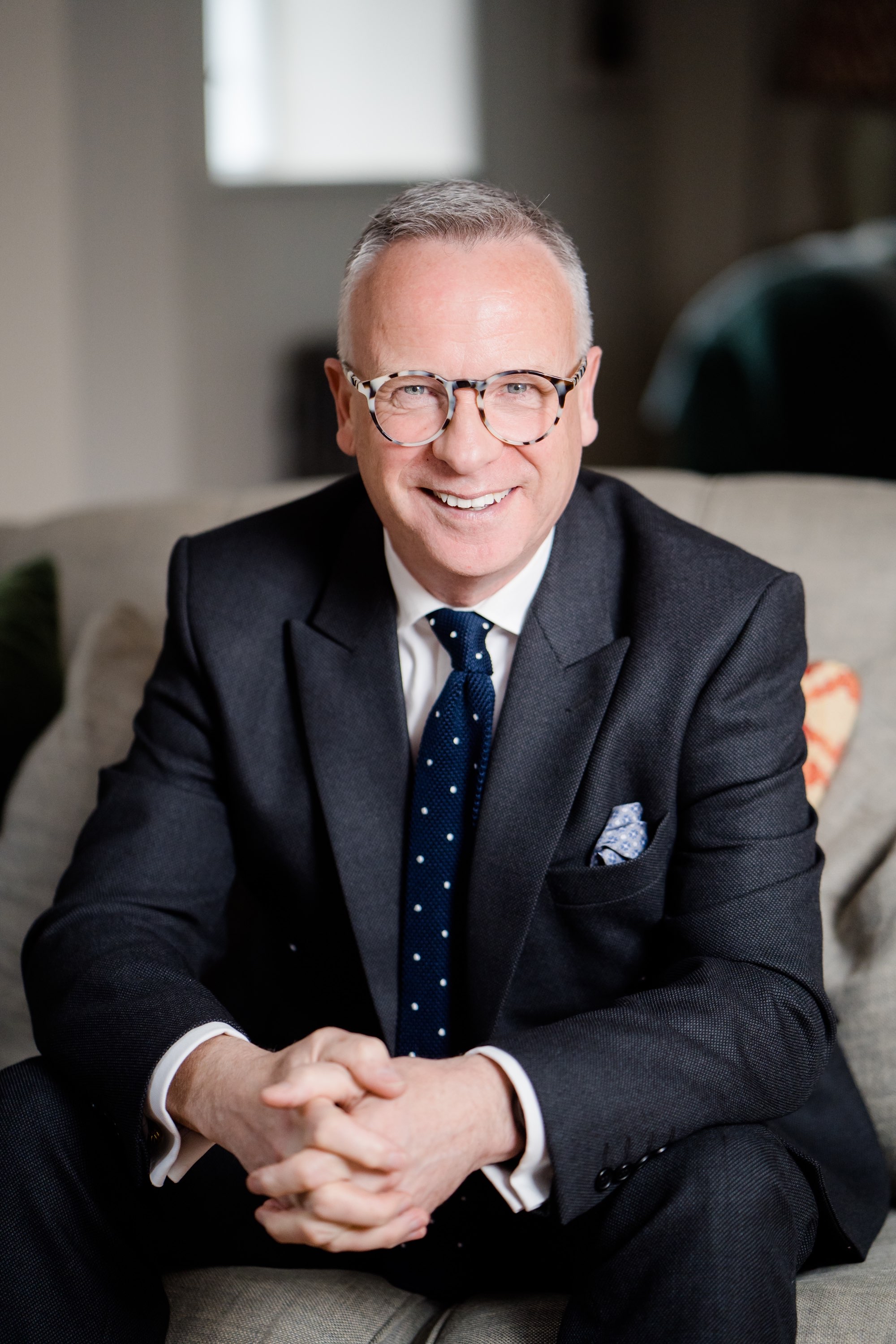
David Linaker is a writer, mentor, and celebrant working with people navigating loss, mortality, and meaning. He is the author of Love, Lose, Live (Homington Press, 2025).


Comments